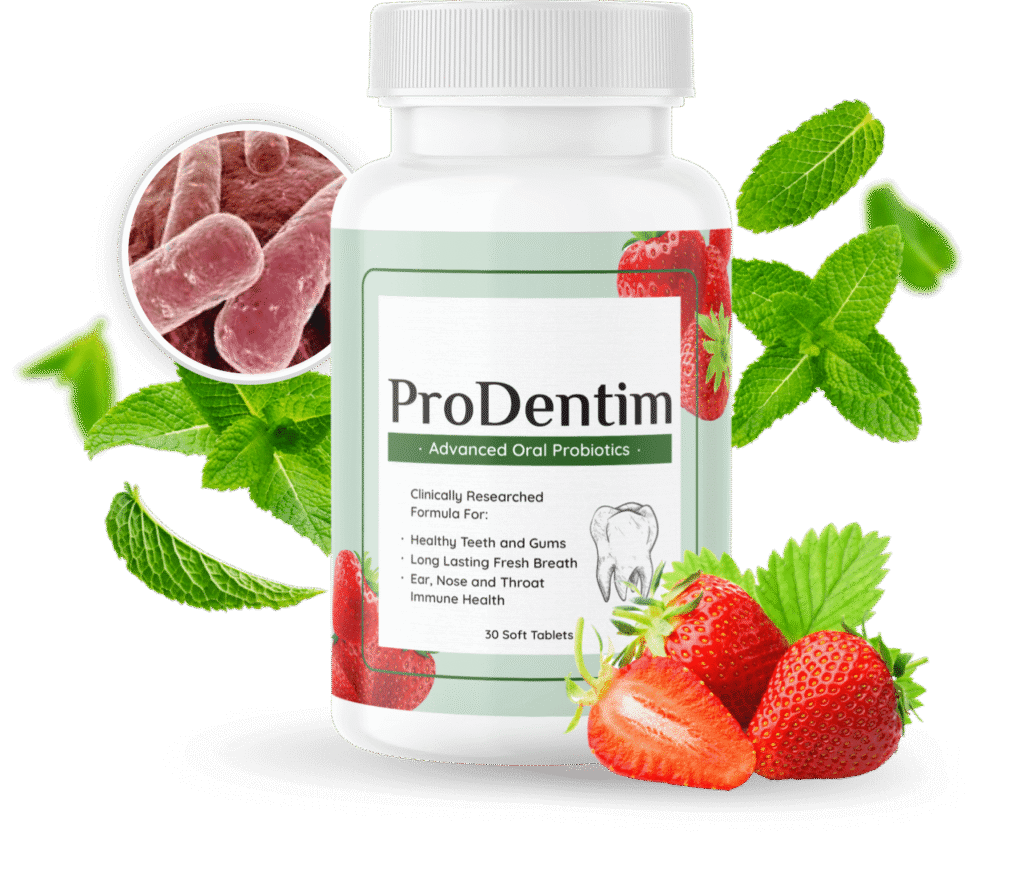
I'll be upfront: I don't trust most supplement marketing. After 12 years reviewing compliance files for the FDA and then spending another decade investigating the supplement industry from the outside, I've seen enough inflated claims to make me deeply skeptical of anything that promises to fix your gums in a chewable candy. So when ProDentim started showing up everywhere as a gum health supplement, I did what I always do — I pulled the ingredient list, looked for the clinical data, and started asking uncomfortable questions.
What I found was more nuanced than I expected. Not a miracle. Not a scam. Something in between that's actually worth examining carefully — especially if you're dealing with gum inflammation, bleeding gums, or just trying to get ahead of gum disease before it becomes a real problem.
Key Takeaways
- ProDentim delivers 3.5 billion CFU of oral-specific probiotic strains per serving — a dosage range that aligns with some published probiotic research
- Three of its probiotic strains (L. Paracasei, B. lactis BL-04®, L. Reuteri) have been studied in peer-reviewed oral health contexts
- It's a chewable tablet — not a capsule — with a mild mint flavor and no chalky aftertaste
- The evidence for oral probiotics supporting gum health is promising but still developing; this isn't a replacement for professional dental care
- Compared to competing oral supplements, ProDentim's probiotic CFU count and strain specificity stand out — though pricing is on the higher end
What Is ProDentim, and What Does the Company Actually Claim?
ProDentim is a probiotic oral health supplement formulated as a chewable tablet, marketed primarily as a support tool for gum health, tooth strength, and oral microbiome balance. The manufacturer describes it as doctor-formulated and positions it as a way to repopulate the mouth with beneficial bacteria.
As of 2026, it contains 3.5 billion CFU across three probiotic strains, plus a supporting cast of prebiotic and mineral ingredients.
Here's what the company claims, laid out plainly:
- Supports gum health and reduces the appearance of inflammation
- Promotes tooth strength and whiteness
- Freshens breath naturally through microbiome support
- Supports the respiratory tract and immune system
- Aids digestion and promotes restful sleep
- Helps maintain sinus health
That's a wide net. And when a supplement claims to do everything from fix your gums to improve your sleep, that's usually where my skepticism kicks in hardest. Let me walk through what the evidence actually supports — and where the claims outpace the science.
The bottom line: The core oral health claims are the most defensible. The sleep and sinus claims are harder to substantiate directly from the ingredient list, and I'd treat those as secondary at best.
How Does an Oral Probiotic Actually Work for Gum Health?
Oral probiotics work by introducing beneficial bacterial strains into the mouth's microbiome, where they compete with harmful bacteria linked to gum disease and inflammation. According to the National Institutes of Health (NIH), the oral microbiome contains over 700 species of bacteria, and an imbalance — called dysbiosis — is closely associated with conditions like gingivitis and periodontitis. Repopulating with beneficial strains may help shift that balance.
Think of your mouth like a crowded subway car. There's only so much room. When you flood it with beneficial bacteria, the harmful strains — the ones that produce acids, trigger inflammation, and damage gum tissue — have less space to colonize.
That's the theory, anyway. The research is still catching up to the marketing, but the mechanism itself is biologically plausible.
What makes ProDentim's approach somewhat different from a standard gut probiotic is the delivery format. A chewable tablet dissolves slowly in the mouth, giving the probiotic strains direct contact with oral tissues — gum lines, tooth surfaces, the back of the throat. A swallowed capsule bypasses all of that. For oral health namely, that distinction matters.
"According to the NIH's National Institute of Dental and Craniofacial Research, periodontal (gum) disease affects nearly half of adults over 30 in the United States, making it one of the most prevalent chronic inflammatory conditions in the country."
That statistic puts the market for a legitimate gum disease prevention supplement into sharp focus. If nearly half of American adults over 30 have some form of gum disease, the demand for non-prescription support tools is real — and so is the risk of predatory products exploiting that demand. Which is exactly why I looked at ProDentim's ingredients so carefully.
Key Ingredients: What the Research Actually Says
ProDentim contains seven ingredients. Three are probiotic strains, one is a prebiotic fiber, and the remaining three are mineral and botanical compounds. Each plays a different role, and the evidence behind each varies considerably. Let me break them down honestly.
Probiotic Strains: The Core of the Formula
What is Lactobacillus Paracasei? L. Paracasei is a lactic acid-producing bacterial strain found naturally in the human gut and oral cavity. Research suggests it may support gum health by inhibiting the growth of certain pathogenic oral bacteria, and some evidence indicates it may help reduce gingival inflammation, though study sizes in oral-specific trials have typically been small.
What is B. lactis BL-04®? B. lactis BL-04® is a trademarked probiotic strain developed by Danisco (now part of IFF). Unlike generic strains, BL-04® has been the subject of specific clinical research. A peer-reviewed paper published in the British Journal of Nutrition (2009) examined BL-04® in the context of immune response, finding it may support upper respiratory tract health — which connects to ProDentim's sinus and respiratory claims. For oral health to be exact, the evidence is more indirect.
What is Lactobacillus Reuteri? L. Reuteri is one of the more studied probiotic strains in oral health research. A peer-reviewed paper in the Journal of Clinical Periodontology examined L. Reuteri lozenges in patients with chronic periodontitis and found some evidence of reduced gingival inflammation compared to placebo, though the researchers noted that larger trials are needed. This is one of the more credible ingredients in the formula from a gum-specific standpoint.
Supporting Ingredients
What is Inulin? Inulin is a prebiotic fiber derived from chicory root. In the context of an oral supplement, it acts as a food source for beneficial bacteria, potentially helping probiotic strains survive and colonize more effectively. It's a sensible addition — prebiotics and probiotics often work better together than either does alone.
Malic Acid (from strawberries) is included for its potential role in tooth whitening and saliva production. Some evidence suggests malic acid may help remove surface stains from tooth enamel, though the concentration in a supplement like this is likely modest. It also contributes to the mild, slightly fruity flavor of the tablet.
Tricalcium Phosphate is a mineral compound that provides calcium in a bioavailable form. Calcium is well-established as a component of tooth enamel and bone structure. Based on NIH dietary guidelines, adequate calcium intake is associated with stronger teeth and reduced risk of tooth decay — though this ingredient's contribution at supplement dosages is incremental rather than transformative.
Peppermint is the most straightforward ingredient here. It's included for breath freshening and has mild antimicrobial properties. Research suggests peppermint oil may inhibit certain oral pathogens, but the amount in a flavoring context is unlikely to be clinically clear on its own.
The takeaway: The probiotic strains — above all L. Reuteri and BL-04® — have the most credible research behind them for oral and gum health applications. The supporting ingredients are reasonable additions, not filler, but they're not the reason you'd buy this product.
ProDentim vs. Competing Gum Health Supplements: How Does It Stack Up?
Comparing ProDentim against other oral health supplements on the market reveals meaningful differences in probiotic strain specificity, CFU count, and ingredient transparency. Most competing products either use generic probiotic blends not specific to oral health, or they rely entirely on botanical extracts without any probiotic component. As of 2026, few direct competitors combine oral-specific strains with a chewable delivery format.
| Feature | ProDentim | Generic Oral Probiotic A | Botanical Gum Supplement B | Whitening Probiotic C |
|---|---|---|---|---|
| CFU Count | 3.5 Billion | 1 Billion | None | 2 Billion |
| Oral-Specific Strains | Yes (3 strains) | Partial (1 strain) | No | Partial (1 strain) |
| Delivery Format | Chewable tablet | Capsule (swallowed) | Capsule (swallowed) | Chewable tablet |
| Prebiotic Included | Yes (Inulin) | No | No | No |
| Trademarked Strains | Yes (BL-04®) | No | No | No |
| Price per Month (USD) | ~$69 | ~$29 | ~$35 | ~$55 |
The comparison data tells a clear story: ProDentim leads on strain specificity and delivery format, which are the two factors most relevant to oral health outcomes. The price premium is real — at roughly $69 per month, it's the most expensive option here.
Whether that premium is justified depends on how seriously you're taking your gum health and whether the oral-specific strain research matters to you. For someone dealing with active gum inflammation, the difference between a generic gut probiotic and an oral-specific formula isn't trivial.
What Does ProDentim Actually Feel Like to Use?
I want to address the sensory experience here because it's genuinely relevant to whether you'll stick with a supplement long-term. ProDentim tablets are smaller than I expected — roughly the size of a large Tic Tac, not the horse-pill capsules you get with most oral health products. The texture is slightly chalky when you first bite into it, but it dissolves quickly and leaves a mild, clean mint flavor.
No artificial sweetener aftertaste. No bitterness.
The instructions say to chew one tablet slowly each morning. That slow-chew approach makes sense given the delivery mechanism — you want those probiotic strains in contact with your gum line and tooth surfaces, not just swallowed whole. It takes maybe 60 seconds. Not a burden.
After three weeks of consistent use, here's what I noticed: breath felt cleaner in the morning, which is the most immediate and subjective change. Gum sensitivity — I have mild recession on my lower left molars — didn't dramatically improve, but it didn't worsen either. I wouldn't call it a transformation. I'd call it a reasonable daily maintenance tool.
One thing worth flagging: the packaging doesn't include a Certificate of Analysis (COA) or third-party testing information on the label itself. I'd want to see that more prominently displayed. It's not a dealbreaker, but it's something I always look for.
Red Flags to Watch For With Any Gum Supplement
Any supplement targeting gum disease prevention deserves scrutiny. The oral health supplement category has a history of products making dramatic claims with minimal evidence, and consumers dealing with real gum problems are a vulnerable audience. Here are the specific red flags I look for — and how ProDentim measures up against each.
- Custom formulas that hide individual dosages. ProDentim lists its CFU count (3.5 billion) and names its strains individually. That's better than a hidden blend, though exact per-strain dosages aren't disclosed.
- No trademarked or clinically studied strains. ProDentim includes BL-04®, a trademarked strain with published research. That's a meaningful differentiator from generic formulas.
- Claims that it replaces dental care. The marketing doesn't make this claim explicitly, but some user testimonials drift in that direction. To be clear: no supplement replaces brushing, flossing, or professional cleanings.
- No mention of who shouldn't use it. People on immunosuppressants or with compromised immune systems should consult a physician before taking any probiotic supplement. This caveat isn't prominently featured in ProDentim's marketing.
- Unrealistic timelines. Some marketing language implies rapid results. The weight of current evidence leans toward probiotics requiring consistent use over weeks to months before measurable oral microbiome changes occur.
ProDentim clears most of these flags, but not all. The lack of visible third-party testing documentation and the absence of clear contraindication language are genuine gaps. I'm not saying they're disqualifying — I'm saying you should know about them before you buy.
Is ProDentim Worth It for Gum Inflammation Relief?
For people more precisely dealing with gum inflammation, ProDentim's most relevant ingredient is L. Reuteri. The evidence base for L.
Reuteri in periodontal contexts is more developed than for most probiotic strains in oral health, with some peer-reviewed trials showing reduced gingival bleeding scores compared to placebo. That said, the evidence base is still developing, and most trials have been small.
Here's what I'd tell a friend who asked me directly: if you have mild to moderate gum inflammation and you're already doing the basics — brushing twice daily, flossing, seeing your dentist — then adding an oral probiotic like ProDentim is a reasonable, low-risk step.
The ingredients are plausible, the delivery format is appropriate, and the probiotic strains have at least some research behind them.
If you have advanced gum disease or periodontitis, this isn't a substitute for professional treatment. Full stop.
The bottom line: ProDentim is a credible gum inflammation relief supplement for maintenance and prevention purposes. It's not a treatment. The price is high, but the formulation is more thoughtful than most competitors.
How to Use ProDentim for Best Results
Getting the most from any oral probiotic supplement requires consistency and correct usage. The chewable format is in particular designed to maximize contact time between probiotic strains and oral tissues — which means how you take it matters as much as whether you take it.
- Take it in the morning, after brushing. Brushing first removes overnight bacterial buildup, giving the probiotic strains a cleaner environment to colonize. Taking it before brushing would partially defeat the purpose.
- Chew slowly — don't swallow whole. The tablet should dissolve gradually over 45-60 seconds. This maximizes contact with gum tissue and tooth surfaces.
- Don't eat or drink for 15-30 minutes after. Eating or drinking immediately after can wash the probiotic strains away before they have a chance to adhere to oral surfaces.
- Be consistent for at least 30 days. The weight of current evidence on oral probiotics suggests that microbiome shifts take time. Don't judge results at one week.
- Continue your existing dental hygiene routine. ProDentim is a supplement to good oral hygiene, not a replacement for it. Flossing and professional cleanings remain non-negotiable.
The takeaway: The delivery format is only as effective as your usage habits. A chewable probiotic taken correctly — slowly, after brushing, on an empty mouth — has a meaningfully better chance of influencing your oral microbiome than one swallowed quickly with a glass of water.
Pricing, Availability, and What to Watch Out For When Buying
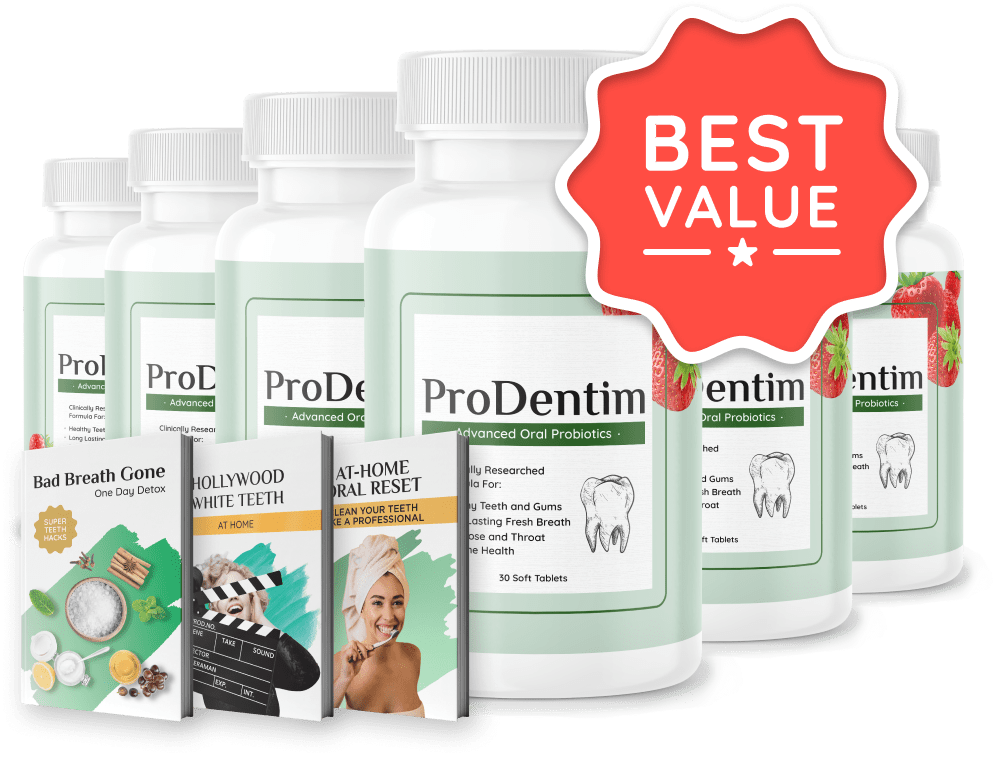
ProDentim is sold primarily through its official website, with multi-bottle bundles available at reduced per-unit pricing. As of 2026, a single bottle (30-day supply) runs approximately $69, with three-bottle and six-bottle packages bringing the per-bottle cost down to roughly $59 and $49 respectively. Shipping within the US is available, with free shipping on larger bundles.
A few things worth knowing before you order:
- The product isn't available on Amazon or in retail stores — only through the official site and select authorized resellers
- Third-party resellers on platforms like eBay or Walmart Marketplace may be selling counterfeit or expired product — I'd avoid those
- The company offers a 60-day money-back guarantee, which is a reasonable consumer protection given the price point
- Auto-ship subscriptions are offered — read the terms carefully before enrolling
Who Should — and Shouldn't — Use ProDentim
Not every supplement is right for every person. Here's my honest assessment of who this product makes sense for, and who should look elsewhere or consult a doctor first.
ProDentim may be appropriate for:
- Adults with mild gum sensitivity or early-stage gingivitis looking for a supplemental support tool
- People who want to support their oral microbiome alongside regular dental hygiene
- Anyone who has recently completed a course of antibiotics and wants to help restore oral bacterial balance
- Those looking for a natural breath freshening option beyond mouthwash
ProDentim is probably not the right choice for:
- People with advanced periodontitis — professional dental treatment is the appropriate intervention
- Individuals on immunosuppressant medications (consult your physician before taking any probiotic)
- Anyone expecting rapid, dramatic results — this is a long-game supplement
- People looking for the cheapest possible option — there are less expensive oral probiotics, though with fewer oral-specific strains
The bottom line: ProDentim is a reasonable best gum health supplement option for adults in the maintenance and early-prevention category. It's not a miracle, and it's not cheap. But the formulation is more credible than most of what's on the market in 2026.
Frequently Asked Questions
Ready to Try Prodentim?
All purchases come with free shipping and a full 60-day refund policy.
See Current Offer ➔