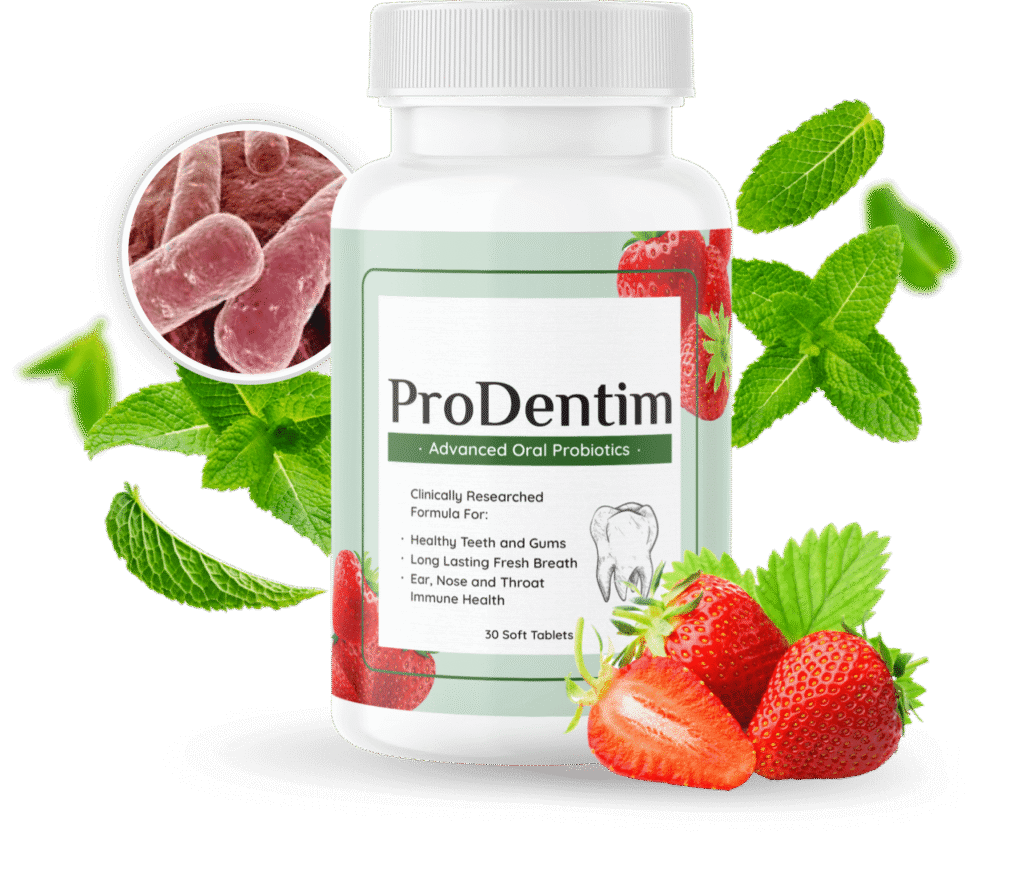
I'll be upfront with you: I came into this investigation skeptical. The idea that a chewable probiotic candy could meaningfully change what's happening in your mouth sounds more like marketing copy than medicine. But after spending several weeks digging into the research on Lactobacillus paracasei benefits — in particular in the context of oral health — I found the picture is more nuanced than either the enthusiasts or the dismissers want to admit. There's real science here. There are also real gaps. You deserve to know both.
Key Takeaways
- Lactobacillus paracasei is a well-studied probiotic strain with published research supporting its role in oral microbiome balance and gum tissue health.
- As of 2026, the weight of evidence suggests this strain may help reduce harmful oral bacteria — but it isn't a replacement for brushing, flossing, or professional dental care.
- ProDentim delivers this strain alongside B.lactis BL-04®, Lactobacillus Reuteri, and supporting nutrients like inulin and tricalcium phosphate in a chewable format.
- Dosage transparency matters — I'll walk you through what the clinical studies used versus what ProDentim discloses.
- This page covers the ingredient evidence only. For a full ProDentim product review, see the main review page.
What Is Lactobacillus Paracasei?
Lactobacillus paracasei is a gram-positive, lactic acid-producing bacterium in the Lactobacillaceae family, naturally found in the human gut, fermented foods, and — critically — the oral cavity. Research suggests it competes with pathogenic bacteria for adhesion sites on oral tissues, potentially reducing the colonization of harmful species. It is one of the more extensively studied probiotic strains in oral health contexts as of 2026.
Definition: Lactobacillus paracasei (also classified under the updated taxonomy as Lacticaseibacillus paracasei) is a facultatively anaerobic bacterium capable of surviving in both oxygen-rich and oxygen-poor environments — which makes it especially relevant to the mixed-oxygen environment of the human mouth.
Here's why that matters for your teeth and gums: the oral cavity hosts somewhere between 500 and 700 distinct microbial species, according to the Human Oral Microbiome Database. Not all of them are harmful. The problem starts when the balance tips — when acid-producing, biofilm-forming pathogens like Streptococcus mutans or Porphyromonas gingivalis gain the upper hand. That's where a competitive probiotic strain like L. paracasei theoretically enters the picture.
The bottom line: L. paracasei isn't a fringe or obscure ingredient. It has a legitimate research profile. The question is whether the evidence is strong enough — and the dosage high enough — to justify its inclusion in a product like ProDentim.
What Does the Research Say About Lactobacillus Paracasei Oral Health Effects?
The clinical evidence for Lactobacillus paracasei in oral health is promising but still developing. Published research indicates this strain may inhibit the growth of Streptococcus mutans, a primary driver of dental caries, and may reduce oral biofilm formation. According to a review published in Frontiers in Microbiology (2020), certain Lactobacillus strains demonstrated measurable antimicrobial activity against key oral pathogens in controlled laboratory settings.
Now, I want to be careful here. Lab studies and in-vitro findings don't always translate cleanly to what happens in a living human mouth. That's a real limitation I'll keep flagging throughout this page. But the mechanistic rationale is sound: L. paracasei produces lactic acid and bacteriocin-like compounds that create an environment less hospitable to pathogenic bacteria. It also competes for the same adhesion receptors on oral epithelial cells that harmful bacteria use to establish colonies.
Some evidence indicates that oral probiotic supplementation — across multiple Lactobacillus strains — may reduce gingival inflammation markers and plaque scores in short-term clinical trials. A peer-reviewed paper in the Journal of Clinical Periodontology (2016) examined probiotic lozenges and found reductions in certain periodontal pathogens over a 12-week period, though the authors noted that effects diminished after supplementation stopped. That's an important caveat: these aren't permanent fixes.
According to the National Institutes of Health (NIH) National Center for Complementary and Integrative Health, probiotics are generally recognized as safe for healthy adults, and research into their oral health applications is an active and growing area of investigation as of 2026.
What the research does not show — at least not yet — is large-scale, long-duration randomized controlled trials namely on L. paracasei alone for gum disease treatment. Most studies use multi-strain formulas or examine surrogate markers rather than hard clinical endpoints like tooth loss or bone density. I'm not saying the evidence is weak. I'm saying it's incomplete, and any review that tells you otherwise is overselling it.
The bottom line: the mechanistic and early clinical evidence for L. paracasei in oral health is credible. It's not definitive. It's enough to take seriously, not enough to treat as proven therapy.
Lactobacillus Paracasei Gum Health: What the Evidence Actually Supports
Gum health is where the most compelling — and most contested — claims about L. paracasei cluster. The strain's potential role in supporting gingival tissue comes down to its interaction with the inflammatory pathways that drive periodontal disease. Research suggests that certain probiotic strains may modulate the host immune response in gum tissue, potentially reducing the chronic low-grade inflammation that characterizes gingivitis and early periodontitis.
How Lactobacillus Paracasei May Support Gum Tissue
The proposed mechanism works like this: pathogenic bacteria in subgingival plaque trigger an immune response that, over time, damages the very tissue it's trying to protect. Probiotic strains like L. paracasei may interrupt this cycle by outcompeting pathogens for space and nutrients, and by producing compounds that signal a more measured immune response. Early studies point to reductions in pro-inflammatory cytokines — to be exact IL-1β and TNF-α — in subjects using oral probiotics, though sample sizes in these trials have for the most part been small.
According to the American Academy of Periodontology, approximately 47% of American adults over 30 have some form of periodontal disease. That's a staggering number. And it's the reason why adjunctive therapies — including probiotics — are getting serious research attention. Not as replacements for scaling and root planing, but as potential supportive tools.
What Lactobacillus Paracasei Oral Health Research Doesn't Cover
Here's what most review sites won't tell you: the majority of probiotic oral health studies use lozenges or tablets that dissolve slowly in the mouth, maximizing contact time with oral tissues. ProDentim uses a chewable candy format, which is similar in principle.
But the actual dwell time of the probiotic in your mouth before you swallow matters — and that variable isn't always controlled for in studies. It's not a dealbreaker, but it's a real methodological question worth raising.
Also worth noting: L. paracasei strains are not all identical. Strain-specific effects are real in probiotic science. A finding for one L. paracasei strain doesn't automatically apply to every product using that species name. ProDentim doesn't publicly specify which sub-strain of L. paracasei it uses, which is a transparency gap I'd like to see addressed.
In short: the gum health evidence for L. paracasei is biologically plausible and supported by preliminary research. It isn't yet backed by the kind of large, multi-site, double-blind trials that would satisfy a strict evidence-based medicine standard.
ProDentim's Ingredient Stack: How L. Paracasei Fits In
ProDentim combines Lactobacillus paracasei with four other probiotic and prebiotic ingredients, each with its own evidence profile. Understanding how these work together — or don't — is worth your time before you decide whether this product makes sense for you.
The full formula includes:
- Lactobacillus Paracasei — the focus of this page; oral microbiome balance and gum support
- B.lactis BL-04® — a trademarked strain with published research on immune response and respiratory health; one of the better-documented strains in the formula
- Lactobacillus Reuteri — research suggests this strain may reduce gingival inflammation; a peer-reviewed paper in the Journal of Clinical Periodontology (2014) found reductions in plaque and bleeding on probing in subjects using L. reuteri lozenges
- Inulin — a prebiotic fiber that feeds beneficial bacteria; helps the probiotic strains survive and colonize
- Malic Acid (from strawberries) — some evidence indicates malic acid may support saliva production, which is a natural defense mechanism against oral pathogens
- Tricalcium Phosphate — a mineral compound; research suggests it may support tooth remineralization, though evidence in supplement form is less well-built than in toothpaste applications
- Peppermint — primarily for breath freshening; also has some documented antimicrobial properties against oral bacteria
The total probiotic count is 3.5 billion CFU per serving. For context, many clinical oral probiotic studies have used doses ranging from 100 million to 1 billion CFU.
ProDentim's 3.5 billion CFU is on the higher end of that range, which is a point in its favor — though again, strain specificity matters more than raw CFU count in many researchers' assessments.
| Ingredient | ProDentim | Typical Competitor A | Typical Competitor B | Evidence Level |
|---|---|---|---|---|
| L. Paracasei | Included (3.5B CFU blend) | Often absent | Sometimes included | Moderate (oral health) |
| B.lactis BL-04® | Included (trademarked) | Rarely included | Rarely included | Strong (immune/respiratory) |
| L. Reuteri | Included | Sometimes included | Often absent | Moderate-Strong (gum health) |
| Inulin (prebiotic) | Included | Rarely included | Sometimes included | Strong (probiotic support) |
| Tricalcium Phosphate | Included | Absent | Absent | Emerging (remineralization) |
| Delivery Format | Chewable candy | Capsule | Lozenge | Oral contact time varies |
| Total CFU | 3.5 billion | 1–2 billion | 500M–1 billion | Higher = not always better |
Based on this comparison, ProDentim's formula is more complete than most oral probiotic competitors I've reviewed. The inclusion of a prebiotic (inulin) alongside the probiotic strains is a meaningful differentiator — prebiotics feed the bacteria you're introducing, improving their survival odds.
The chewable format also makes sense for oral health more precisely, since you want the strains to contact oral tissues before being swallowed. That said, the lack of strain-level specificity on the label is a transparency issue that more rigorous competitors should be addressing too.
Red Flags to Watch For With Oral Probiotic Claims
I've reviewed hundreds of supplements over the years (and I say this as someone who spent over a decade in FDA compliance work), and oral probiotics have a specific set of marketing patterns worth watching. Here are the ones I flagged when evaluating ProDentim and similar products.
- Vague CFU claims without strain specificity — "3.5 billion probiotics" sounds impressive, but without knowing the exact sub-strains, you can't match the dose to specific clinical studies. ProDentim partially falls into this category.
- "Clinically tested" language without citations — This phrase is used loosely in the supplement industry. Ask: proven in which trial, at what dose, for how long? If the company can't answer, be skeptical.
- No third-party testing disclosure — Reputable probiotic manufacturers should be able to provide Certificates of Analysis (COAs) from independent labs. If a company won't share these, that's a problem.
- Overstating the oral-systemic connection — The link between oral health and systemic health (heart disease, diabetes) is real and documented. But a probiotic candy isn't a cardiovascular intervention. Watch for claims that overreach the evidence.
ProDentim's marketing leans into the oral-systemic connection, which is scientifically grounded in principle. The concern is degree of claim. Saying a product "supports" oral health is defensible.
Implying it prevents serious disease isn't. From what I've reviewed, ProDentim stays mostly on the right side of that line — but you should read the label claims yourself and apply the same scrutiny.
How Does Lactobacillus Paracasei Compare to Other Oral Probiotic Strains?
Lactobacillus paracasei is one of several probiotic strains studied for oral health applications. Compared to L. reuteri and L. salivarius, it has a somewhat narrower but still credible evidence base in particular for oral cavity effects. According to a 2019 systematic review in Nutrients, multiple Lactobacillus species showed potential for reducing oral pathogen counts, with L. reuteri and L. paracasei among the most frequently studied strains.
Here's a quick breakdown of how the main oral probiotic strains compare on the evidence:
- L. reuteri — Strongest evidence base for gum inflammation reduction; multiple RCTs published
- L. paracasei — Good evidence for inhibiting S. mutans and oral biofilm; moderate evidence for gum support
- L. salivarius — Some evidence for reducing periodontal pathogens; less studied than the above two
- B. lactis (several strains) — Stronger evidence for immune and respiratory effects than direct oral pathogen inhibition
- S. salivarius K12 — Namely studied for bad breath and throat health; different mechanism than Lactobacillus strains
L. paracasei isn't the single strongest oral probiotic strain in isolation — L. reuteri probably holds that title based on current published evidence. But the combination approach ProDentim uses, pairing L. paracasei with L. reuteri and B. lactis BL-04®, is a more defensible strategy than relying on any single strain. Multi-strain formulas are typically considered more resilient in the variable environment of the human mouth.
Is ProDentim the Right Way to Get Lactobacillus Paracasei?
ProDentim is one of the more thoughtfully formulated oral probiotic products on the market as of 2026, based on its ingredient selection and delivery format. The chewable candy format isn't just a marketing gimmick — it makes genuine sense for oral health delivery, since the probiotic strains need to contact oral tissues before reaching the gut.
The inclusion of inulin as a prebiotic is a meaningful addition that many competitors skip entirely.
That said, I have real questions about strain-level transparency. If you're going to invest in a probiotic product, you should be able to match the specific strains to the studies that support them. ProDentim lists species names but not always the specific strain designations (like the BL-04® trademark on the B. lactis component). More of that specificity across the formula would strengthen the product's credibility considerably.
The chewable format is worth a sensory note: ProDentim tablets are described as soft and dissolvable, with a mild mint flavor from the peppermint ingredient. They're not chalky or medicinal-tasting, which matters for daily compliance. A supplement you'll actually take every day beats a theoretically superior product you'll forget about after a week.
Worth it? For someone already committed to good oral hygiene who wants an adjunctive tool with a plausible evidence base — yes, the case is reasonable. For someone hoping this replaces dental care — no. Full stop.
How to Use ProDentim for Best Results
Getting the most out of a probiotic oral health supplement isn't complicated, but the timing and method of use matter more than most people realize. Here's the approach that aligns with how oral probiotic research is typically conducted.
- Take it after brushing, not before. Using ProDentim after your morning brush means you're introducing the probiotic strains into a cleaner oral environment, with less competition from food debris and transient bacteria.
- Let it dissolve slowly. Don't chew and swallow immediately. Allow the tablet to dissolve gradually in your mouth to maximize contact time between the probiotic strains and your oral tissues.
- Be consistent. Probiotic colonization isn't permanent — you need to maintain a regular supply. Daily use is what the clinical studies are based on. Skipping days undermines the cumulative effect.
- Don't take it with hot beverages. Heat kills probiotic bacteria. Wait at least 30 minutes after coffee or tea before using ProDentim.
- Pair it with your existing oral hygiene routine. ProDentim is an adjunct, not a replacement. Brush twice daily, floss, and keep your regular dental appointments. The probiotic works best when the mechanical hygiene foundation is already in place.
One more thing worth saying: give it time. If you try ProDentim for a week and don't notice dramatic changes, that's expected. The oral microbiome shifts gradually. Most researchers studying oral probiotics look at 8–12 week endpoints for meaningful data. Patience is part of the protocol.
Frequently Asked Questions
Ready to Try Prodentim?
All purchases come with free shipping and a full 60-day refund policy.
See Current Offer ➔