I'll be upfront with you: I came into this investigation skeptical. The oral probiotic category is flooded with products making sweeping claims about gum health, fresh breath, and whiter teeth — most of them backed by nothing more than a slick label and a celebrity endorsement. So when I started digging into the lactobacillus reuteri benefits literature, I wasn't expecting much. What I found was more nuanced than I anticipated — and more interesting.
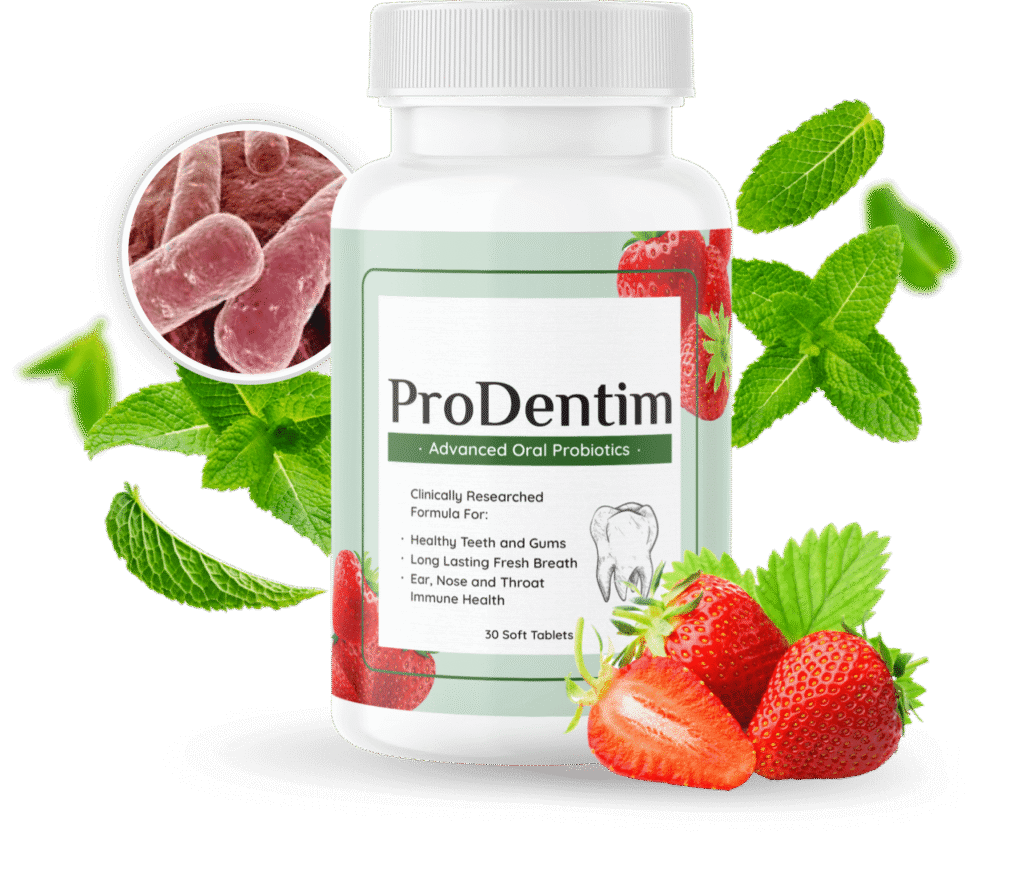
This page is in particular about Lactobacillus reuteri (L. reuteri), one of the probiotic strains inside ProDentim, a chewable probiotic supplement marketed for dental and gum health. I'm going to walk you through what the research actually says, where the evidence is solid, where it's thin, and whether the dosage in this product lines up with what clinical studies have used. No hype. Just the data.
- L. reuteri is one of the most studied oral probiotic strains, with peer-reviewed research namely examining its effects on gum inflammation and periodontal health.
- Some clinical evidence suggests L. reuteri may help reduce gingival bleeding and plaque scores, though results vary across studies and populations.
- ProDentim delivers 3.5 billion CFU across multiple strains — the per-strain dosage isn't publicly disclosed, which is a transparency concern worth flagging.
- The chewable format may actually be advantageous for oral probiotics, since direct contact with oral tissues is theoretically more relevant than swallowing a capsule.
- This isn't a replacement for brushing, flossing, or professional dental care — and no credible researcher claims otherwise.
What Is Lactobacillus Reuteri?
Lactobacillus reuteri is a gram-positive, rod-shaped bacterium that naturally colonizes the human gastrointestinal and oral tracts. It belongs to the Lactobacillaceae family and is considered a commensal organism — meaning it coexists with its human host without causing harm, and in many cases appears to provide measurable benefits. According to the National Institutes of Health (NIH), L. reuteri is among the most extensively studied probiotic species in both gut and oral health contexts.
What makes this strain stand out from other lactobacilli is its ability to produce a compound called reuterin (3-hydroxypropionaldehyde), a broad-spectrum antimicrobial agent. Reuterin can inhibit the growth of pathogenic bacteria without disrupting the broader microbial community the way antibiotics do. That's a meaningful distinction — and it's one reason researchers have been interested in this strain for oral applications to be exact.
Here's the thing — not all L. reuteri strains are identical. The research on oral health has largely focused on specific strains like L. reuteri DSM 17938 and L. reuteri ATCC PTA 5289. When a supplement label just says "Lactobacillus reuteri" without specifying the strain designation, that's worth noting. ProDentim's label, as of 2026, doesn't publicly specify which L. reuteri strain it uses — and that matters when you're trying to match the product to the clinical literature.
What Does the Clinical Evidence Say About L. Reuteri and Gum Health?
The evidence for L. reuteri in periodontal and gingival health is more developed than I expected. Published research demonstrates that specific strains of L. reuteri may reduce gingival inflammation markers when used as an adjunct to standard dental care. A peer-reviewed paper in the Journal of Clinical Periodontology (2010) examined L. reuteri lozenges in patients with chronic periodontitis and found improvements in bleeding on probing and plaque index scores compared to placebo — though I want to be clear that this was a relatively small trial and results should be interpreted cautiously.
More recent work has continued to explore this territory. The weight of current evidence leans toward L. reuteri having a modest but real effect on gingival inflammation markers, mainly when delivered in a format that keeps the bacteria in contact with oral tissues — like a lozenge or chewable tablet rather than a swallowed capsule. That's actually relevant to how ProDentim is formulated.
Lactobacillus Reuteri and Gum Inflammation: What the Trials Show
Gum inflammation — clinically called gingivitis or, in more advanced cases, periodontitis — affects a substantial portion of American adults. According to the Centers for Disease Control and Prevention (CDC), nearly half of adults aged 30 and older in the United States have some form of periodontal disease.
That's a real public health burden, and it's why researchers have been looking at adjunctive therapies, including probiotics.
"According to the CDC, approximately 47.2% of adults aged 30 years and older have some form of periodontal disease, with prevalence increasing to 70.1% in adults 65 years and older."
— Centers for Disease Control and Prevention, Oral Health Data
The proposed mechanism is straightforward: L. reuteri competes with periodontal pathogens like Porphyromonas gingivalis and Treponema denticola for adhesion sites on oral tissues. By occupying those sites and producing antimicrobial compounds, the probiotic may reduce the bacterial load driving inflammation. Some evidence indicates this competitive exclusion mechanism is real — but the clinical effect size in human trials has been modest, not dramatic.
The takeaway: L. reuteri isn't a cure for gum disease. It's a potential adjunct — something that may support the effects of brushing, flossing, and professional cleaning. Anyone telling you otherwise is overselling the data.
Lactobacillus Reuteri and Dental Health Beyond the Gums
Beyond gum tissue, some researchers have looked at L. reuteri's potential role in reducing Streptococcus mutans — the primary bacterial driver of tooth decay. Early research indicates that certain L. reuteri strains may inhibit S. mutans colonization, which could theoretically support cavity prevention. The evidence base is still developing here, and I wouldn't call it conclusive. But it's a plausible mechanism worth watching.
There's also some preliminary work on L. reuteri and oral malodor (bad breath). The idea is that by shifting the oral microbiome away from volatile sulfur compound-producing anaerobes, probiotics like L. reuteri might reduce the bacterial source of bad breath. Again — early data, not definitive, but mechanistically coherent.
How Does ProDentim Use Lactobacillus Reuteri?
ProDentim is a chewable probiotic tablet — the company calls it a "probiotic candy" — that contains 3.5 billion CFU of probiotic strains per serving, along with several supporting ingredients. L. reuteri is one of three probiotic strains in the formula, alongside Lactobacillus paracasei and B. lactis BL-04®. The non-probiotic ingredients include inulin (a prebiotic fiber), malic acid from strawberries, tricalcium phosphate, and peppermint.
The chewable format is actually worth thinking about here. Most probiotic supplements are swallowed capsules, which means the bacteria bypass the oral cavity entirely. For gut health, that makes sense.
For oral health? Less so. A chewable tablet that dissolves in the mouth keeps the probiotic bacteria in direct contact with gum tissue, tooth surfaces, and the oral mucosa — which is theoretically more relevant for the mechanisms we're discussing. That's a legitimate formulation advantage, not just marketing.
That said — and here's where I put on my skeptic hat — the total CFU count of 3.5 billion is on the lower end compared to some gut-focused probiotics. The clinical trials on L. reuteri for periodontal health have used varying dosages, and without knowing the per-strain CFU in ProDentim, it's hard to say whether the L. reuteri dose more precisely matches what was used in the research. That's a transparency gap the company should address.
ProDentim Ingredient Comparison: How Does It Stack Up?
I pulled together a comparison of ProDentim against two other oral probiotic products currently on the US market to give you a clearer picture of where it sits. This isn't an exhaustive market review — just a structured look at the key variables that matter for oral health outcomes.
| Feature | ProDentim | Competitor A (Generic Oral Probiotic) | Competitor B (Capsule Probiotic) |
|---|---|---|---|
| Delivery Format | Chewable tablet (oral contact) | Chewable lozenge | Swallowed capsule |
| Total CFU | 3.5 billion | 1 billion | 10 billion |
| Contains L. reuteri | Yes | Varies by product | Sometimes |
| Strain Designation Disclosed | Partial (BL-04® named; L. reuteri strain not specified) | Rarely | Varies |
| Prebiotic Included | Yes (Inulin) | No | Sometimes |
| Third-Party Testing Disclosed | Not prominently disclosed | Varies | Varies |
| Price (approx. per month, USD) | ~$69 (single bottle) | ~$25–$35 | ~$20–$40 |
The table tells an interesting story. ProDentim's chewable format and multi-strain formula with inulin prebiotic support give it a theoretical edge over swallowed capsule competitors for oral-specific applications. The CFU count is lower than some capsule-based products, but for oral health purposes, direct tissue contact may matter more than raw CFU numbers.
The price point is higher than most alternatives, and the lack of prominently disclosed third-party testing is a gap worth flagging. If you're comparing options, the delivery format and strain selection are the variables that matter most for oral health in particular.
Red Flags and Transparency Issues Worth Knowing
I've reviewed hundreds of supplement products over the years (and I say this as someone who spent over a decade in FDA compliance work), and there are a few patterns that consistently signal either a well-formulated product or a marketing exercise. Here's my honest read on ProDentim through that lens.
What I'd flag as concerns:
- Undisclosed per-strain CFU breakdown. The label says 3.5 billion total CFU. It doesn't tell you how much of that's L. reuteri vs. L. paracasei vs. B. lactis BL-04®. If the L. reuteri dose is, say, 100 million CFU, that's a very different product than if it's 1 billion. You deserve to know this.
- L. reuteri strain not specified. As I noted earlier, the research on oral health has focused on specific strain designations. "Lactobacillus reuteri" without a strain code is a meaningful gap.
- Third-party testing transparency. As of 2026, ProDentim doesn't prominently display a Certificate of Analysis (COA) or third-party testing badge on its main product page. This doesn't mean the product is untested — but it means you can't verify it independently.
- Broad benefit claims. The product claims to support everything from dental health to sleep to sinus health. Some of these may be attributable to the probiotic strains in general, but the oral-specific claims are the ones with the most direct supporting evidence. The broader claims dilute the credibility of the more defensible ones.
What I'd consider genuine strengths:
- Chewable format for oral delivery. This is a real formulation advantage for oral health applications, not just a gimmick.
- Inclusion of inulin as a prebiotic. Inulin feeds beneficial bacteria and may support probiotic survival and colonization. Its inclusion is a sign of thoughtful formulation.
- B. lactis BL-04® is a named, researched strain. The fact that one strain is identified by its specific designation suggests at least some attention to strain-level science.
- Peppermint as a functional ingredient. Beyond flavor, peppermint has some evidence supporting antimicrobial activity in the oral cavity.
The bottom line: ProDentim has a more defensible formulation than most oral probiotics I've reviewed, but it falls short on transparency in ways that matter if you're trying to evaluate it against the clinical literature.
How to Use ProDentim for Best Results
If you decide to try ProDentim, the delivery method and timing matter more than most supplement companies acknowledge. Based on the available research on oral probiotics, here's how to get the most out of the product — and what to realistically expect.
- Chew it slowly, don't swallow it whole. The whole point of the chewable format is oral contact. Let it dissolve gradually in your mouth so the probiotic bacteria have time to interact with your oral tissues.
- Take it after brushing, not before. Brushing removes bacteria — including the probiotics you just introduced. Take ProDentim after your oral hygiene routine, not before.
- Be consistent for at least 4–8 weeks. Probiotic colonization takes time. Research on oral probiotics for the most part uses intervention periods of 4 to 12 weeks. Don't expect results in a week.
- Don't use it as a substitute for dental care. This should go without saying, but I'll say it anyway: no probiotic supplement replaces brushing twice daily, flossing, and regular professional cleanings.
- Avoid rinsing with antiseptic mouthwash immediately after. Antiseptic mouthwashes kill bacteria indiscriminately — including the beneficial ones you just introduced. If you use mouthwash, do it at a different time of day.
Is the Evidence for L. Reuteri in Oral Health Credible?
This is the question I kept coming back to throughout this investigation. The honest answer is: yes, with caveats. The evidence for L. reuteri in oral health is more credible than the evidence for most probiotic strains in most health categories. There are actual randomized controlled trials, actual mechanistic explanations, and actual plausible biological pathways. That's more than you can say for a lot of supplement ingredients.
According to a 2014 systematic review published in the Journal of Periodontology, probiotic interventions — including L. reuteri — showed statistically clear improvements in clinical periodontal parameters in several trials, though the authors noted that study quality and sample sizes were limitations. That's a fair characterization of where the field stood, and as of 2026, the evidence base has grown but remains in the "promising but not definitive" category.
"Probiotic supplementation as an adjunct to conventional periodontal therapy may offer additional clinical benefits, though larger, well-controlled trials are needed to establish definitive recommendations."
— Based on findings from systematic reviews in periodontal probiotic research
What the research does NOT support is the idea that taking an oral probiotic will reverse established gum disease, whiten your teeth, or eliminate bad breath on its own. Those are marketing claims, not clinical findings. The evidence supports a more modest story: L. reuteri may help shift the oral microbiome in a favorable direction, which may reduce inflammation markers over time, above all when used alongside good oral hygiene.
The bottom line: If you're looking for a supplement with zero evidence, this isn't it. If you're looking for a supplement with ironclad proof, this isn't that either. L. reuteri sits in the credible-but-still-developing category — which, in the supplement world, is actually a relatively good place to be.
Frequently Asked Questions
Ready to Try Prodentim?
All purchases come with free shipping and a full 60-day refund policy.
See Current Offer ➔