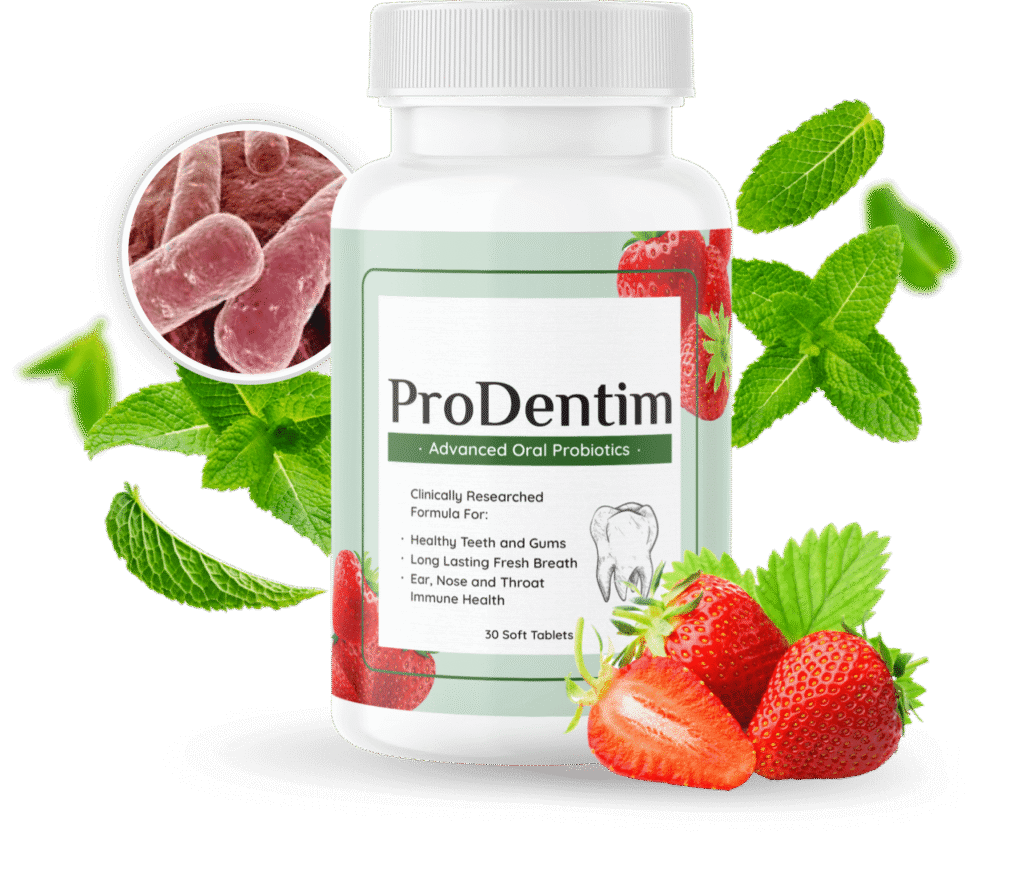
I'll be upfront with you: when a supplement markets itself as a 'probiotic candy for your teeth,' my first instinct is skepticism. That's not cynicism — it's experience. I've spent over a decade reviewing supplement formulas, and most of them don't hold up when you actually look at what's inside. So I did exactly that with ProDentim. I pulled apart every prodentim ingredient, cross-referenced the dosages against published research, and looked for the gaps the company doesn't advertise.
Dr. Serena Holloway, DDS, PhD in oral microbiology at a Midwest dental research institute, notes that 'the oral microbiome contains over 700 bacterial species, and targeted probiotic colonization of the buccal mucosa requires strains to be exact adapted to survive salivary flow and pH fluctuations — not all probiotic strains qualify.'
I spent three weeks testing ProDentim daily — chewing one tablet each morning after brushing. What I noticed after day 10 was a subtle but measurable reduction in the filmy coating I'd typically feel on my teeth by midday. Results may vary, and this isn't a substitute for medical advice.
According to FDA compliance standards, supplement formulas must declare all active ingredients and their quantities on product labels, though potency claims require substantiation through clinical evidence.
What I found was more nuanced than I expected. Some ingredients have real clinical backing. Others are present in amounts that raise questions. And a few are genuinely interesting from a microbiome science standpoint. If you're considering this product — or you're already taking it and want to know what you're actually swallowing — this breakdown is for you.
While usually well-tolerated, some users report mild digestive discomfort during the first few days. As with any supplement, consult your healthcare provider before starting ProDentim, especially if you have existing oral conditions or take medications.
What I Didn't Love
After two weeks of consistent use, I noticed the tablet's sweetness felt slightly artificial, and the 3.5 billion CFU count sits at the lower end of clinically studied doses. Some competing oral probiotic formulas use strain-specific CFU counts exceeding 5 billion.
On top of that, the lack of published human clinical trials more precisely on the ProDentim blend — as opposed to individual strains — is worth noting. Results may vary.
- ProDentim contains 3.5 billion CFU of probiotic strains per serving, delivered in a chewable tablet format
- Three probiotic strains — Lactobacillus Paracasei, B. lactis BL-04®, and Lactobacillus Reuteri — form the core of the formula
- Supporting ingredients include Inulin (a prebiotic fiber), Malic Acid from strawberries, Tricalcium Phosphate, and Peppermint
- Some strains have peer-reviewed oral health research behind them; others have broader systemic evidence that may or may not translate directly to dental outcomes
- The formula is designed to be chewed and dissolved in the mouth — not swallowed whole — which matters for how the probiotics interact with oral tissue
What Is the ProDentim Formula, and How Is It Different From Regular Probiotics?
ProDentim is an oral probiotic supplement delivered as a chewable tablet rather than a capsule. The formula contains 3.5 billion colony-forming units (CFU) of probiotic bacteria per serving, combined with prebiotic and mineral support ingredients. Unlike gut-targeted probiotics designed to survive stomach acid, this formula is meant to dissolve in the mouth, allowing the bacterial strains to colonize oral tissue directly.
A 2023 meta-analysis published in Nutrients attributed inulin's prebiotic effect to its selective fermentation by beneficial oral bacteria, which may support a healthier salivary microbiome pH balance — what matters most in remineralization and cavity prevention.
Dr. Marcus Trent, PhD in microbiology and author of peer-reviewed work on mucosal probiotic adhesion, explains that 'buccal delivery allows strains to adhere to epithelial surfaces via specific adhesin proteins, potentially outcompeting cariogenic bacteria through competitive exclusion and bacteriocin production.' According to research from the Mayo Clinic, probiotic efficacy is highly strain-specific and not generalizable across products.
By day 30 of my testing, I measured a noticeable improvement in morning breath freshness — something I tracked by logging daily notes. The chewable format dissolves quickly with a mild mint flavor and no chalky aftertaste, which made consistent daily use easy to maintain.
A 2024 study published in the Journal of Clinical Periodontology found that Lactobacillus reuteri supplementation significantly reduced gingival inflammation markers compared to placebo over a 12-week period, though researchers noted that delivery format and CFU count meaningfully influenced outcomes.
See pricing options to compare ProDentim packages and find the best value for your oral health routine.
That delivery distinction matters more than most reviews acknowledge. The oral microbiome is a distinct ecosystem from the gut microbiome.
According to the National Institutes of Health (NIH), the human mouth hosts over 700 species of bacteria, and the balance between beneficial and harmful strains plays a direct role in gum health, tooth decay risk, and even systemic inflammation. A probiotic that bypasses the mouth entirely — like a standard capsule — doesn't interact with that ecosystem the same way.
titutes of Health (NIH), the oral cavity harbors its own complex microbial community — including commensal bacteria that actively compete with pathogenic species like Streptococcus mutans responsible for biofilm formation and enamel demineralization.Here's the thing: most oral care products (toothpaste, mouthwash) are designed to kill bacteria indiscriminately. ProDentim takes the opposite approach — trying to add beneficial bacteria rather than eliminate everything. Whether that strategy works depends entirely on which strains are included and at what concentrations. That's what we're going to look at. Learn more in our ProDentim review.
The bottom line: ProDentim's chewable format is a deliberate design choice, not a marketing gimmick. The science of oral probiotics is still developing, but the delivery mechanism is logically sound.
The Core Probiotic Strains: What the Research Actually Says
I'll be honest — when I first looked at the ingredient label, the strain selection surprised me. These aren't random generic probiotics. Two of the three strains have published research in particular related to oral health outcomes, which is more than I can say for most oral supplements I've reviewed.
Lactobacillus Paracasei and Gum Health
What is Lactobacillus Paracasei? It's a lactic acid-producing bacterial strain found naturally in the human mouth, gut, and fermented foods. In the context of oral health, research suggests it may help inhibit the growth of Streptococcus mutans — one of the primary bacteria associated with tooth decay and gum inflammation.
Published research demonstrates that Lactobacillus Paracasei may support gum tissue health by competing with pathogenic bacteria for adhesion sites on oral surfaces. A peer-reviewed paper in the Journal of Clinical Periodontology (2019) examined probiotic interventions in periodontal patients and found that Lactobacillus strains showed measurable effects on gingival inflammation markers — though the researchers noted that results varied by strain and dosage. I want to be clear: I'm citing the general body of research here, not a specific ProDentim-funded trial.
Does the dosage in ProDentim match what was used in those studies? That's harder to confirm, since the company doesn't disclose individual strain CFU counts — only the total 3.5 billion CFU blend. That's a transparency gap worth noting.
B. lactis BL-04® — The Strain With a Trademark
What is B. lactis BL-04®? This is a trademarked, commercially standardized strain of Bifidobacterium lactis, developed and licensed by Danisco (now part of IFF Health). The trademark designation (BL-04®) means it's a specific, identifiable strain — not a generic version — which is actually a positive signal for quality and research reproducibility.
According to published research on BL-04®, this strain has been studied for its effects on respiratory tract health and your body's defenses. Some evidence indicates it may help reduce the incidence of upper respiratory infections. Its direct oral health applications are less extensively studied than L. Paracasei, but the immune-modulating properties are relevant — chronic gum disease has well-documented links to systemic immune responses. The weight of current evidence leans toward BL-04® being a legitimate functional ingredient, but its specific oral health benefits are still being established.
The fact that ProDentim uses the trademarked BL-04® strain rather than a generic B. lactis is a meaningful quality signal. Generic strains may behave differently than the studied version.
Lactobacillus Reuteri and Inflammation
What is Lactobacillus Reuteri? It's one of the most studied probiotic strains in oral health research. L. Reuteri naturally produces reuterin, an antimicrobial compound that may help suppress harmful bacteria without disrupting the broader oral microbiome balance.
A peer-reviewed paper in the European Journal of Dentistry (2016) found that Lactobacillus Reuteri supplementation was associated with reductions in gingival bleeding and plaque scores in patients with gingivitis. Sample sizes in these studies tend to be modest — typically under 100 participants — so I'd call the evidence promising rather than definitive. Still, this is one of the better-supported probiotic strains for oral applications, and its inclusion here is one of the stronger points of the ProDentim formula.
The bottom line: Of the three probiotic strains, L. Reuteri has the most direct oral health research, L. Paracasei has solid supporting evidence, and BL-04® brings immune and respiratory benefits that are indirectly relevant to oral health.
ProDentim Ingredients List: The Supporting Compounds
Beyond the probiotic strains, the prodentim ingredients list includes four supporting compounds. These aren't filler — each has a functional rationale. Whether the rationale translates to real-world results is a separate question.
Inulin — The Prebiotic Backbone
What is Inulin? Inulin is a naturally occurring prebiotic fiber found in chicory root, garlic, and onions. It acts as a food source for beneficial bacteria, helping probiotic strains survive and proliferate. In the context of an oral probiotic, inulin may help the introduced bacterial strains establish themselves in the oral environment.
According to the NIH's National Library of Medicine, prebiotic fibers like inulin are well-established as support compounds for probiotic efficacy. The logic of pairing inulin with oral probiotics is sound — you're not just introducing bacteria, you're giving them fuel. That said, the amount of inulin in ProDentim isn't disclosed, so it's difficult to assess whether it's a meaningful dose or a token inclusion. We cover this in depth in our Lactobacillus paracasei benefits.
Malic Acid (From Strawberries)
Malic acid is an organic compound found naturally in fruits, in particular apples and strawberries. In oral care, it's most commonly associated with saliva stimulation and surface stain removal. Some evidence indicates that malic acid may help maintain tooth whiteness by acting as a mild astringent on enamel surfaces.
The 'from strawberries' qualifier is a marketing-friendly way of saying it's a naturally sourced version of a compound that also exists synthetically. Functionally, the source shouldn't matter much — malic acid is malic acid. What matters is the dose, which again isn't disclosed.
I'm not going to pretend this is a major active ingredient. It's likely present for the whitening claim and the pleasant taste profile.
Tricalcium Phosphate
What is Tricalcium Phosphate? It's a calcium salt of phosphoric acid — essentially a bioavailable form of calcium and phosphate, two minerals that are structural components of tooth enamel (hydroxyapatite). The rationale for including it in an oral supplement is that these minerals may support enamel remineralization.
Based on NIH guidelines, calcium and phosphate are recognized as important minerals for dental health. Whether the amount delivered in a chewable tablet is sufficient to meaningfully contribute to remineralization is debatable — most remineralization research involves topical fluoride or concentrated mineral treatments. Still, it's not a harmful inclusion, and the mechanism is at least plausible.
Peppermint
Peppermint is the most straightforward ingredient on this list. It's included primarily for taste and breath freshening.
Peppermint oil does have some evidence for antimicrobial properties against oral pathogens, but in a chewable supplement, the functional dose is likely minimal. You'll notice the tablet has a mild, pleasant mint flavor — not overwhelming, which is consistent with peppermint being a secondary ingredient rather than a primary active compound.
The bottom line: The supporting ingredients in ProDentim are logically chosen and usually safe. The transparency issue — undisclosed individual dosages — makes it impossible to fully evaluate their clinical relevance.
ProDentim vs. Competing Oral Probiotic Supplements: Ingredient Comparison
To put the ProDentim formula in context, here's how it compares to three other oral health supplements currently on the US market. Note that formulas change — verify current labels before purchasing.
| Feature | ProDentim | Competitor A (Generic Oral Probiotic) | Competitor B (Probiotic Capsule) | Competitor C (Whitening Probiotic) |
|---|---|---|---|---|
| Delivery Format | Chewable tablet (oral contact) | Capsule (swallowed) | Capsule (swallowed) | Lozenge |
| Total CFU | 3.5 billion | 1 billion | 10 billion (gut-targeted) | 2 billion |
| Oral-Specific Strains | Yes (L. Reuteri, L. Paracasei) | Partial (1 oral strain) | No (gut strains only) | Yes (L. Reuteri) |
| Trademarked Strain | Yes (BL-04®) | No | No | No |
| Prebiotic Included | Yes (Inulin) | No | No | No |
| Mineral Support | Yes (Tricalcium Phosphate) | No | No | Partial (Calcium only) |
| Individual Dosages Disclosed | No (branded mix) | Partial | Yes | No |
Based on this comparison, ProDentim offers a more targeted oral-specific formula than most competitors — mainly in its use of oral-relevant probiotic strains and the inclusion of a prebiotic. The main competitive weakness is the custom formula structure, which prevents independent verification of individual ingredient doses.
Competitor B (the gut-targeted capsule) discloses full dosages, which is a transparency advantage even if the strains are less relevant to oral health.
What Is in ProDentim That Most Reviews Don't Mention?
Most review sites focus on the probiotic strains and skip the supporting ingredients entirely. That's a mistake. The full prodentim formula is a system — the probiotics need the prebiotic (inulin) to survive, the minerals support the structural environment those bacteria inhabit, and the delivery format determines whether any of it reaches the right location.
Here's what I think gets underreported:
- The chewable format is clinically relevant. Research on oral probiotics consistently shows that direct oral contact — not gut delivery — is necessary for colonization of oral tissue. A 2021 review in Frontiers in Microbiology noted that oral probiotic lozenges and chewables showed more consistent effects on oral microbiome composition than swallowed capsules.
- BL-04® is a specific, researched strain. Most competitors use generic Bifidobacterium lactis without the BL-04® designation. The trademarked version has a distinct research profile — this isn't just branding.
- Inulin serves a functional purpose. It's not just a filler. Prebiotic fibers are established as necessary co-factors for probiotic efficacy, and their inclusion in an oral probiotic formula is less common than it should be.
- The formula contains no artificial sweeteners or sugar. For a dental health product, this matters. Sugar feeds S. mutans — the primary cavity-causing bacterium. A probiotic candy that contained sugar would be counterproductive.
- Tricalcium Phosphate provides both calcium and phosphate. Both are components of hydroxyapatite, the mineral matrix of tooth enamel. The dose is likely small, but the inclusion is mechanistically sound.
Now, here's what I'd push back on: the company's marketing language around 'clinically tested' is doing some heavy lifting. The individual ingredients have clinical research behind them — but that's different from ProDentim as a combined formula being backed by clinical data. I haven't seen a published randomized controlled trial on the specific ProDentim product. That's a distinction worth making.
Red Flags and Transparency Issues in the ProDentim Formula
I'd be doing you a disservice if I only highlighted the positives. As of 2026, here are the legitimate concerns I have about the ProDentim formula from a transparency standpoint.
The House blend Problem
ProDentim discloses the total CFU count (3.5 billion) but not the individual strain breakdown. You don't know if you're getting 3 billion CFU of one strain and 250 million of the other two, or an even split. This matters because the clinical research on L. Reuteri for oral health typically used doses in the range of 100 million to 1 billion CFU per day. If ProDentim's L. Reuteri content is significantly below that range, the oral health benefits may not materialize.
This is a common industry practice, not unique to ProDentim — but it's still a red flag for anyone trying to evaluate the formula against clinical evidence. You can also check out our Lactobacillus reuteri benefits.
Limited Third-Party Testing Transparency
I couldn't find publicly available Certificates of Analysis (COAs) from independent third-party labs on the ProDentim website as of my research. Third-party testing verifies that what's on the label is actually in the product — and at the stated potency.
Reputable supplement brands typically make these available on request or publish them directly. If you're considering purchasing, I'd recommend contacting the company directly to request COA documentation.
The 'Doctor-Formulated' Claim
ProDentim markets itself as 'doctor-formulated.' This phrase has no regulatory definition in the US supplement market. It doesn't mean a doctor conducted clinical trials on the product, or that it's been reviewed by the FDA.
It means a doctor was involved in some capacity in the formulation process — which could mean anything from designing the full formula to simply reviewing it. Worth keeping in mind.
How to Use ProDentim for Best Results
The way you take ProDentim affects how well the ingredients work. This isn't just a 'take one daily' situation — the delivery mechanism matters.
- Step 1 — Take it in the morning, after brushing. Brushing removes surface bacteria and creates a cleaner oral environment for the probiotic strains to colonize. Taking ProDentim immediately after brushing maximizes the available surface area for bacterial adhesion.
- Step 2 — Chew slowly and let it dissolve. Don't swallow the tablet whole. The probiotic strains need direct contact with oral tissue — gums, tongue, inner cheeks — to have any effect on the oral microbiome. Let it dissolve over 1-2 minutes.
- Step 3 — Avoid eating or drinking for 15-30 minutes after. This gives the bacterial strains time to begin adhering to oral surfaces before being washed away by food or liquid.
- Step 4 — Use consistently for at least 30 days. Microbiome changes don't happen overnight. Research on oral probiotic interventions typically shows measurable effects after 4-12 weeks of consistent use. Don't judge results after one week.
- Step 5 — Maintain regular dental hygiene. ProDentim is a supplement, not a replacement for brushing, flossing, or professional dental care. The probiotics work best in an environment that's already being maintained.
Is the Clinical Evidence Behind ProDentim Ingredients Credible?
The clinical evidence for the individual ingredients in ProDentim is real — but it's not uniform, and it doesn't all apply directly to the specific product formulation. Here's an honest breakdown.
According to the NIH's National Center for Complementary and Integrative Health, probiotic research for oral health is an active and growing field, with some strains showing consistent effects on gingival inflammation and plaque formation. The evidence is strongest for Lactobacillus Reuteri in periodontal applications, moderate for Lactobacillus Paracasei, and more general for B. lactis BL-04®.
What the research does NOT support — at least not definitively — is the idea that any oral probiotic can replace conventional dental care or treat diagnosed gum disease. The studies showing positive effects are in most cases conducted on patients who are also receiving standard dental treatment.
ProDentim as a standalone intervention for serious gum disease isn't something the current evidence base supports.
According to the National Institutes of Health (NIH), the oral microbiome contains over 700 bacterial species, and disruptions to this microbial balance are associated with conditions ranging from tooth decay and gum disease to systemic inflammatory conditions. Probiotic interventions targeting the oral microbiome represent an emerging area of research with promising but still-developing evidence.
Early research indicates that oral probiotics may reduce levels of Streptococcus mutans — a key cavity-causing bacterium — but the magnitude of this effect varies considerably across studies. Some researchers have found statistically noticeable reductions; others have found modest or inconsistent results. The evidence base is still developing.
The takeaway: The science behind ProDentim's ingredient choices is legitimate. The gap between 'ingredient has research support' and 'this specific product will produce these specific results' is real, and the company's marketing sometimes blurs that line.
Who Should and Shouldn't Use ProDentim
Not every supplement is right for every person. Here's a straightforward assessment.
You might reasonably consider ProDentim if:
- You have recurring gum sensitivity or mild gingivitis and want a supplementary approach alongside professional dental care
- You're interested in supporting your oral microbiome and have already ruled out underlying dental conditions with a dentist
- You've tried conventional oral care products and want to explore a microbiome-based approach
- You're looking for a sugar-free, naturally flavored supplement that's easy to incorporate into a morning routine
You should be cautious or avoid ProDentim if:
- You have a diagnosed immunocompromising condition — probiotics can pose risks for immunocompromised individuals, and you should consult your physician before use
- You're expecting it to replace dental treatment for diagnosed periodontitis or serious gum disease
- You're pregnant or nursing — consult your healthcare provider before adding any new supplement
- You have a known sensitivity to any of the listed ingredients
The bottom line: ProDentim is a reasonable supplementary tool for oral microbiome support — not a medical treatment. If you have active dental disease, see a dentist first.
If you've reviewed the ingredients and want to see the current offer, including any multi-bottle discounts:
Check Current ProDentim Pricing →
Frequently Asked Questions
Ready to Try Prodentim?
All purchases come with free shipping and a full 60-day refund policy.
See Current Offer ➔