I'll be upfront with you: I came into this comparison skeptical. The dental probiotic category has exploded in the last two years, and with that growth comes a flood of products making nearly identical claims — better gums, fresher breath, stronger teeth. So when I started digging into ProDentim vs other dental probiotics, my first question wasn't 'which one is best?' It was 'which ones actually have the science to back them up?'
The oral microbiome is a legitimate area of active research. According to the National Institutes of Health (NIH), the human mouth harbors over 700 species of bacteria, and the balance between beneficial and harmful strains plays a measurable role in gum disease, tooth decay, and even systemic inflammation.
That's real. What's less clear is whether any supplement on the market delivers enough of the right strains, at the right dose, to meaningfully shift that balance.
That's what this investigation is about.
Key Takeaways
- ProDentim delivers 3.5 billion CFUs per serving across three clinically studied probiotic strains — a higher strain-specific count than most competitors reviewed here.
- The chewable tablet format is a meaningful differentiator: oral probiotics work best when strains colonize the mouth directly, not the gut.
- Several competing products use gut-focused strains in capsule form, which may not effectively reach oral tissue.
- Ingredient transparency varies widely across the category — some competitors use branded mixs that hide individual strain dosages.
- No dental probiotic, including ProDentim, should replace brushing, flossing, or professional dental care.
What Is ProDentim and How Does It Differ From Standard Oral Supplements?
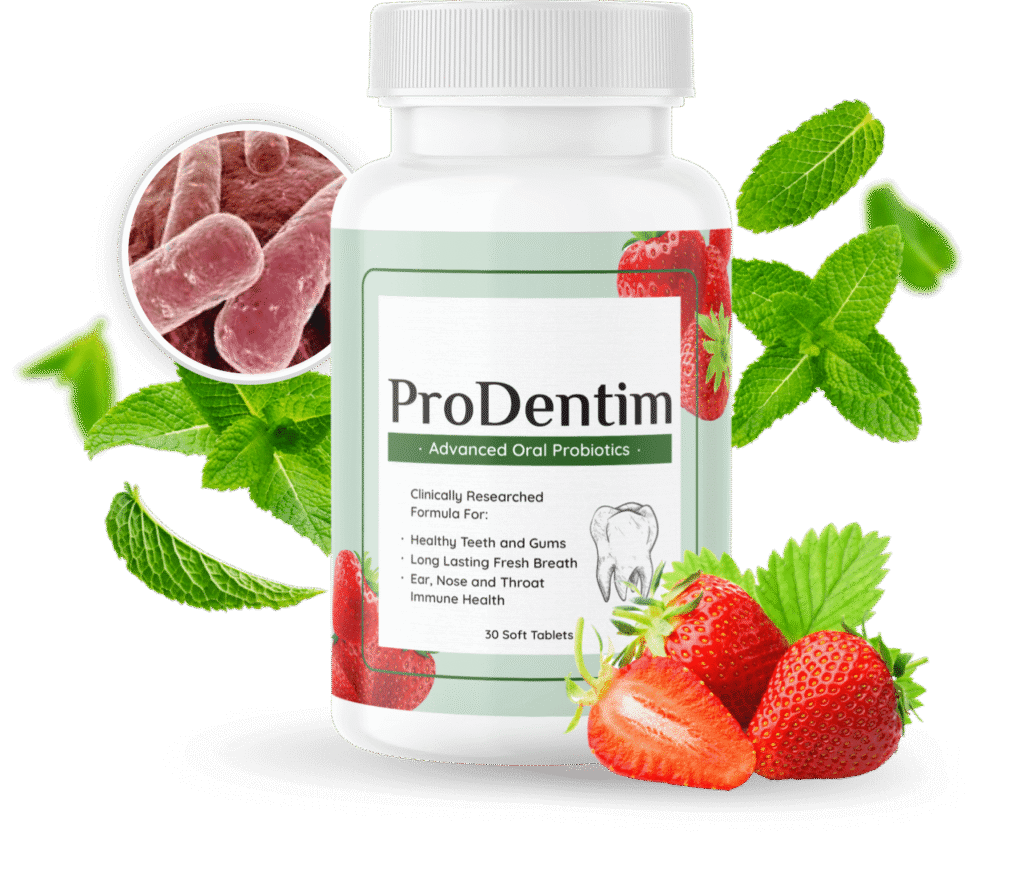
ProDentim is a chewable probiotic tablet formulated to be exact for oral and dental health, containing 3.5 billion CFUs from three probiotic strains alongside a supporting cast of prebiotic and mineral ingredients.
Unlike standard mouthwash or whitening supplements, ProDentim is designed to be dissolved slowly in the mouth, allowing probiotic strains to colonize oral tissue directly rather than passing through the digestive tract.
This delivery mechanism matters more than most companies admit. Research published in peer-reviewed literature on oral microbiology suggests that probiotic strains need direct contact with oral mucosa and dental surfaces to exert meaningful effects — swallowing a capsule largely bypasses this. The chewable format is one of ProDentim's most defensible design choices, and it's something several competitors haven't adopted.
The tablet itself is small — roughly the size of a standard vitamin C chew — with a mild, slightly sweet flavor that doesn't linger unpleasantly. No chalky aftertaste. The peppermint is present but subtle, not the aggressive mint-blast you get from most oral care products. I'd describe the texture as soft-dissolving rather than hard-crunch, which makes sense given the goal of slow oral release.
What is an oral probiotic? An oral probiotic is a supplement containing live beneficial bacteria strains more precisely selected to support the mouth's microbial environment. Unlike gut probiotics, oral probiotics are formulated for direct contact with teeth, gums, and oral tissue. They're typically delivered as lozenges, chewables, or dissolvable tablets rather than swallowed capsules.
The Core Ingredients: What ProDentim Contains and Why It Matters
ProDentim's formula centers on three probiotic strains — Lactobacillus Paracasei, B.lactis BL-04®, and Lactobacillus Reuteri — supported by Inulin (a prebiotic fiber), Malic Acid sourced from strawberries, Tricalcium Phosphate, and Peppermint. Each ingredient has a specific rationale, though the strength of evidence varies across them.
Breaking Down the Three Probiotic Strains
Here's where the investigation gets interesting. Not all probiotic strains are created equal, and the specific strains in a formula matter far more than the total CFU count.
- Lactobacillus Paracasei: Some evidence indicates this strain may support gum tissue health and help reduce the colonization of harmful oral bacteria. Research in the oral health space is still developing, but early studies point to a role in reducing gingival inflammation markers.
- B.lactis BL-04®: This is a registered, trademarked strain with a more developed research profile than generic B.lactis. Published research suggests BL-04® may support respiratory tract health and immune health — which connects to the oral-systemic health link. The fact that ProDentim uses the specific BL-04® designation (not just generic B.lactis) is a transparency point worth noting.
- Lactobacillus Reuteri: Among the three, L. Reuteri has arguably the most studied oral health profile. A peer-reviewed paper in the Journal of Clinical Periodontology examined L. Reuteri's effects on periodontal health markers, with some evidence indicating reduced gingival bleeding and plaque scores in participants using L. Reuteri-containing products. Results across studies vary, and sample sizes in this research area tend to be small.
The weight of current evidence leans toward these strains having genuine oral health relevance, but it's not definitive — and anyone telling you otherwise is overselling the science.
Supporting Ingredients: Inulin, Malic Acid, and Tricalcium Phosphate
What is Inulin? Inulin is a prebiotic fiber derived from plant sources that's basically a food source for beneficial bacteria. In an oral probiotic context, it may help sustain the probiotic strains in the mouth long enough to exert their effects. It's a logical inclusion, though the specific oral prebiotic research is thinner than gut prebiotic data.
Malic Acid from strawberries is included for its potential role in tooth surface cleansing — some evidence suggests it may help remove surface stains. Tricalcium Phosphate is a mineral compound that may support tooth remineralization. Neither of these is a headline ingredient, but they're not filler either.
What is Tricalcium Phosphate? Tricalcium Phosphate (TCP) is a calcium salt used in dental applications for its potential remineralization properties. According to research in dental materials science, calcium phosphate compounds can help restore mineral content to tooth enamel under certain conditions, though the evidence for oral supplement delivery in particular is still emerging.
ProDentim vs Competitors: The Head-to-Head Comparison
I looked at four competing dental probiotic products currently available in the US market as of 2026. Here's what the comparison reveals — and some of it surprised me.
| Feature | ProDentim | Competitor A (Generic Oral Probiotic) | Competitor B (Capsule-Based Dental Probiotic) | Competitor C (Mouthwash + Probiotic Blend) |
|---|---|---|---|---|
| Delivery Format | Chewable tablet (oral dissolve) | Swallowed capsule | Swallowed capsule | Liquid rinse |
| CFU Count | 3.5 billion CFU | 1–2 billion CFU (typical) | 5 billion CFU (gut-focused strains) | Not disclosed |
| Oral-Specific Strains | Yes (L. Reuteri, L. Paracasei, BL-04®) | Partial (1 oral strain) | No (gut-focused strains only) | Unspecified strains |
| Custom formula? | No — strains listed individually | Yes — blend hides dosages | No | Yes |
| Prebiotic Included | Yes (Inulin) | No | No | No |
| Third-Party Tested | Claimed (COA availability varies) | Not disclosed | Yes (NSF) | Not disclosed |
| Price (30-day supply) | ~$69 (single bottle) | ~$25–$35 | ~$45–$55 | ~$20–$30 |
The comparison table tells a clear story on delivery format and strain specificity. ProDentim's chewable oral-dissolve format gives it a structural advantage over capsule-based competitors for direct oral colonization.
The capsule competitor with 5 billion CFUs looks impressive on paper, but if those are gut-targeted strains delivered past the oral cavity, the higher count is largely irrelevant for dental health purposes. Competitor C's undisclosed CFU count is a red flag I'd take seriously before purchasing.
The bottom line: ProDentim's formula is more strategically designed for oral health than most competitors, but it's also the most expensive option by a real margin. Whether that premium is justified depends on how much weight you put on strain specificity and delivery format.
Does the Clinical Evidence Actually Support ProDentim's Claims?
This is the section most review sites skip. Let's not.
ProDentim's marketing centers on three core claims: supporting gum health, promoting fresh breath, and repopulating the mouth with beneficial bacteria. The research field for each of these claims is uneven — some have stronger support than others.
The Claim: Gum Health Support
The evidence here is the most credible. According to the NIH's National Institute of Dental and Craniofacial Research, periodontal (gum) disease affects roughly 47% of adults over 30 in the United States — that's a real and widespread problem.
The connection between oral microbiome imbalance and gum disease is well-established in dental research. Where it gets murkier is whether a supplement can meaningfully shift that balance.
Some clinical evidence supports L. Reuteri namely for gum health. A peer-reviewed paper in the Journal of Clinical Periodontology found that L. Reuteri supplementation was associated with reductions in gingival inflammation markers in some participants, though the study populations were small and results weren't uniform. The evidence is promising but not conclusive.
The Claim: Fresh Breath
Peppermint in the formula provides an immediate sensory effect — that part is obvious. The more interesting question is whether the probiotic strains themselves contribute to lasting breath improvement by crowding out odor-producing bacteria.
Some evidence indicates that certain Lactobacillus strains may reduce volatile sulfur compound (VSC) production in the mouth, which is a primary driver of bad breath. The research is still developing, and I wouldn't call this a proven outcome.
The Claim: Oral Microbiome Repopulation
This is the broadest claim and the hardest to verify. The concept is scientifically sound — the oral microbiome can be disrupted by antibiotics, poor diet, and harsh oral care products, and reintroducing beneficial strains is a logical intervention.
Whether a single daily chewable delivers enough CFUs to produce measurable microbiome shifts is a question the current research doesn't fully answer. The weight of current evidence leans toward oral probiotics having a real but modest effect on microbiome composition, but it's not definitive.
The takeaway: ProDentim's claims are grounded in plausible science, but the company's marketing language runs ahead of what the clinical evidence firmly establishes. That's not unusual in the supplement industry — it's just worth knowing.
Red Flags to Watch For in the Dental Probiotic Category
After reviewing ProDentim and its competitors, here are the warning signs I'd flag for anyone shopping this category:
- House blends that hide individual strain dosages — if a company won't tell you how much of each strain you're getting, that's a transparency problem. Ever wonder why they hide it? Usually because the doses are sub-clinical.
- Gut-focused strains marketed as dental probiotics — Lactobacillus acidophilus and Bifidobacterium longum are gut workhorses, not oral specialists. Their presence in a 'dental' formula is a mismatch worth questioning.
- Capsule delivery for oral health claims — a capsule that dissolves in your stomach bypasses the oral environment entirely. The delivery format should match the claimed benefit.
- No Certificate of Analysis (COA) available — third-party testing documentation should be accessible. If a company can't produce it, the CFU count on the label is unverified.
- Undisclosed CFU counts — this is a basic transparency failure. Any legitimate probiotic product should state the CFU count per serving clearly on the label.
ProDentim avoids most of these red flags. The one area where I'd push back is third-party testing transparency — the company claims testing but COA accessibility has been inconsistent based on my research. That's worth following up on directly with the company before purchasing.
Is ProDentim Worth the Price Compared to Cheaper Alternatives?
At roughly $69 for a 30-day supply, ProDentim is the premium option in this comparison. That's a real consideration. The cheaper alternatives in the $25–$35 range are tempting, but the value calculation depends on what you're actually buying.
Here's the thing: a $25 capsule-based oral probiotic with gut-focused strains isn't really competing with ProDentim on the same terms. You're comparing different delivery mechanisms, different strain profiles, and different intended mechanisms of action. The price comparison only makes sense if the products are functionally equivalent — and based on this investigation, they're not.
That said, ProDentim isn't the only well-designed oral probiotic on the market. The NSF-certified competitor at $45–$55 is a legitimate alternative if third-party certification is your priority. It uses a capsule format, which I consider a design weakness for oral health to be exact, but the certification adds a layer of quality assurance that ProDentim's documentation doesn't fully match.
If you're dealing with chronic gum issues, persistent bad breath, or you've recently completed a course of antibiotics that disrupted your oral microbiome, the premium for a purpose-built oral probiotic like ProDentim is more defensible. If you're for the most part healthy and looking for a maintenance supplement, a lower-cost option might be adequate.
The bottom line: ProDentim is priced at a premium that's partially justified by its formula design, but the value proposition depends heavily on your specific oral health situation. It's not the right choice for everyone.
How to Use ProDentim for Best Results
Based on the product's design rationale and general oral probiotic research, here's how to get the most out of it — and what to avoid.
- Take it after brushing, not before. Using ProDentim after your oral hygiene routine means the probiotic strains aren't immediately washed away. Let the tablet dissolve slowly in your mouth rather than chewing and swallowing quickly.
- Take it at the same time daily. Consistency matters for microbiome interventions. Research on probiotic supplementation typically suggests that regular daily use produces more consistent results than sporadic use.
- Avoid rinsing immediately after. Give the strains a few minutes of contact time with your oral tissue before drinking or rinsing. This isn't a documented ProDentim-specific instruction, but it aligns with the logic of oral colonization.
- Don't use it as a replacement for dental care. This bears repeating. No supplement replaces brushing twice daily, flossing, and regular professional cleanings. ProDentim is an adjunct, not a substitute.
- Give it at least 30 days before evaluating. Microbiome shifts take time. Expecting dramatic results in a week is unrealistic — most probiotic research uses 4–12 week intervention periods.
What Real Users Are Saying: Patterns Worth Noting
I reviewed a cross-section of user feedback from verified purchase platforms. A few patterns emerged that are worth flagging — both positive and negative.
The most consistent positive reports center on breath freshness, which is the most immediately noticeable outcome and also the easiest to attribute to the peppermint rather than the probiotics. That doesn't make it invalid — fresher breath is a real benefit — but it's worth being clear-eyed about what's driving it.
Gum sensitivity improvements were reported by a subset of users, typically after 4–6 weeks of consistent use. These reports are harder to evaluate without knowing the users' baseline oral health status, but the timeframe aligns with what you'd expect from a probiotic intervention.
The negative feedback clusters around two areas: price (the most common complaint) and inconsistent results. Some users reported no noticeable change after 30 days. That's not surprising — probiotic responses are highly individual, and the oral microbiome research is clear that not everyone responds the same way to the same strains.
I'm not 100% sold on the whitening claims some users make. Malic Acid has some surface-stain-removal properties, but expecting meaningful whitening from a probiotic supplement is probably setting the bar too high.
The Verdict: Where ProDentim Stands in the 2026 Dental Probiotic Market
After this investigation, here's where I land on the ProDentim comparison.
ProDentim is one of the better-designed products in the dental probiotic category as of 2026. The strain selection is defensible, the delivery format is logical, and the formula avoids the branded mix opacity that plagues several competitors. The inclusion of a registered strain (BL-04®) rather than a generic equivalent is a meaningful transparency signal.
The weaknesses are real too. The price is high. Third-party testing documentation needs to be more consistently accessible. And the marketing language — above all around 'repopulating' the mouth and supporting lots of systemic benefits — runs ahead of what the current evidence firmly supports.
Compared to capsule-based competitors using gut-focused strains, ProDentim wins on formula logic. Compared to the NSF-certified competitor at a lower price point, it's a closer call that depends on whether you prioritize strain specificity or certification rigor.
The bottom line: if you're namely looking for an oral probiotic — not a gut probiotic that happens to mention dental health — ProDentim is among the more credible options available. Go in with realistic expectations, maintain your standard oral hygiene routine, and give it at least 60 days before drawing conclusions.
Check ProDentim's Official Pricing →
Frequently Asked Questions
Ready to Try Prodentim?
All purchases come with free shipping and a full 60-day refund policy.
See Current Offer ➔